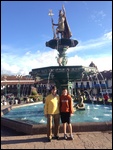
Pass the Coca, We are in Cusco Cusco, Peru |
Cusco, Peru
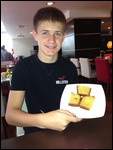
After a good nights sleep we hit the breakfast buffet. Trey discovered pound cake and that is exactly what he did with it. He pounded about 10 slices. After that breakfast of champions, we were ready to head back to airport to catch our flight to Cusco.
The flight was a little over an hour. We decided it must be an easy flight for the pilot because the plane does not have to descend. The altitude in Cusco is over 12,000 feet.
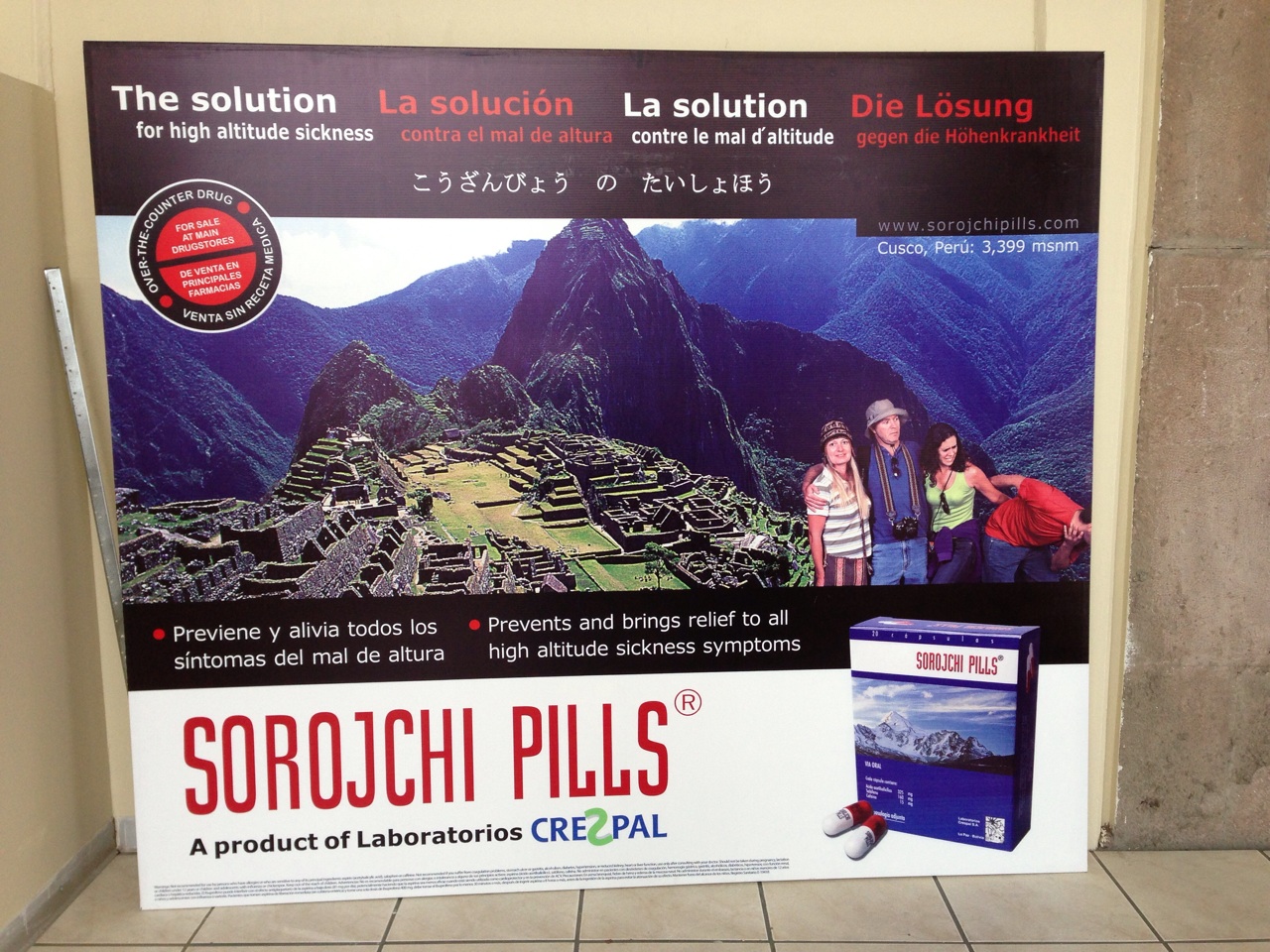
The first thing you see getting off the plane is an advertisement for altitude sickness medicine. The air is really thin and you feel it immediately. It was not hard to find folks not taking the altitude well like the guy in the ad.
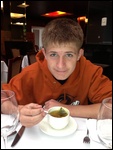
The locals say that coca tea is the best remedy. Coca leaves are used to make cocaine. They serve it everywhere and we were wiling to try anything. It does seem to help a bit and we were off for our city tour at 1:30.
We are staying at the Picoaga Hotel, originally was the old mansion of the Spanish noble, the Marquis of Picoaga (century XVII). It is decorated in colonial style, framed by fine stone archways on two levels; beautiful columns; capitols and Spanish patio, complete an authentic sample of 17th Century architecture. Due to their location and history, the Hotel’s Colonial installations are considered part of Cuzco’s Cultural Heritage. Divided into two parts: a Colonial and Modern wing, the Picoaga Hotel is an example of how to combine stone arcades, patios with water features and murals characteristic of XVIII Century, just like a lot of places here.
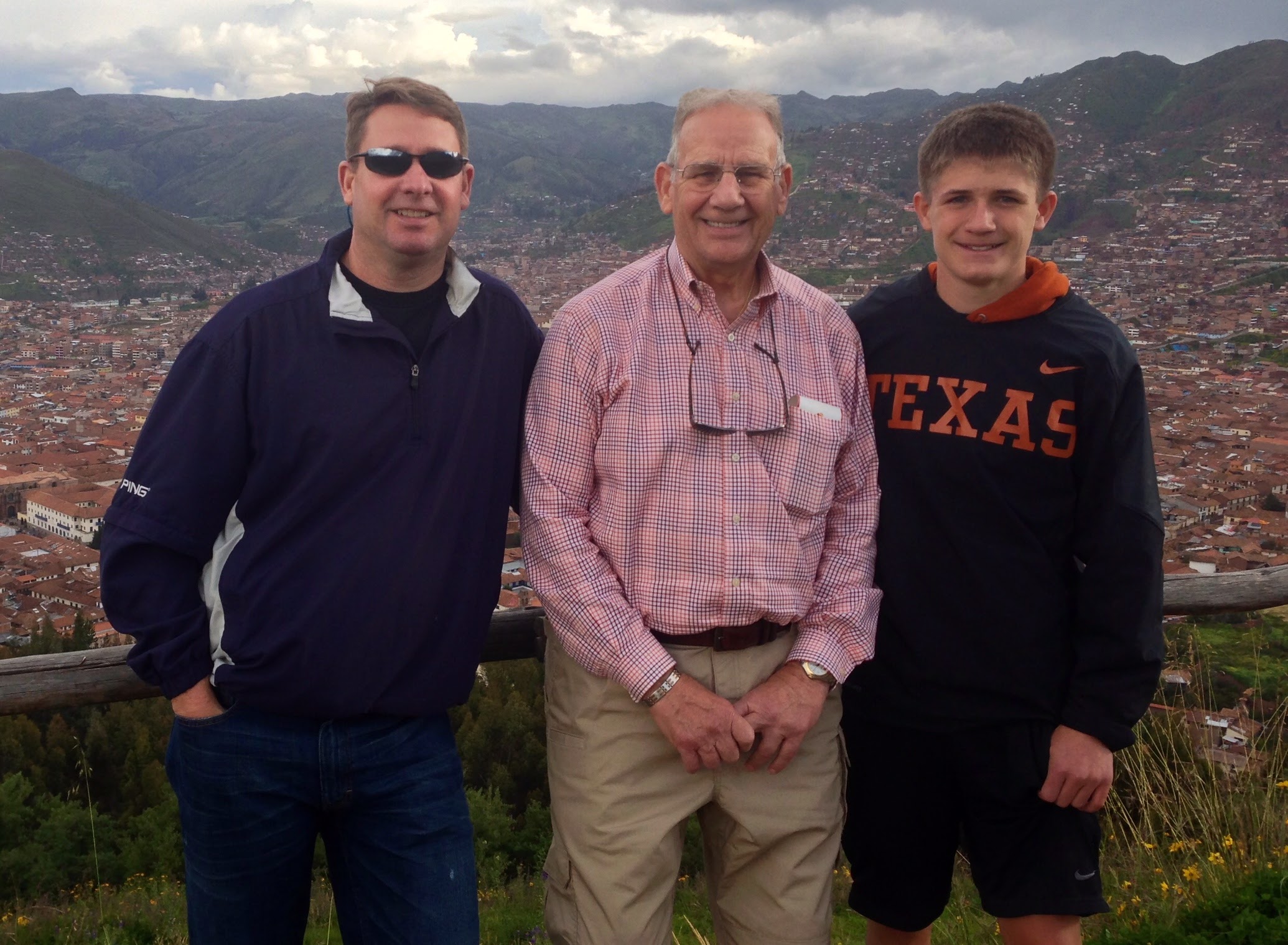
Cusco is a city of 350,000 people. The name Cusco means center or naval ( belly button). It was the capital of the Incan empire. The foundations of the current buildings (built by the Spanish, who destroyed the Incan temples and palaces) are the foundations designed by Incan engineers. In this earthquake prone city, buildings have been damaged or destroyed a few times, but the foundations remain strong. A testament to the mortarless system of building designed to withstand the recurring earthquakes. There are plenty of things to see and we saw a few today.
Tambomachay
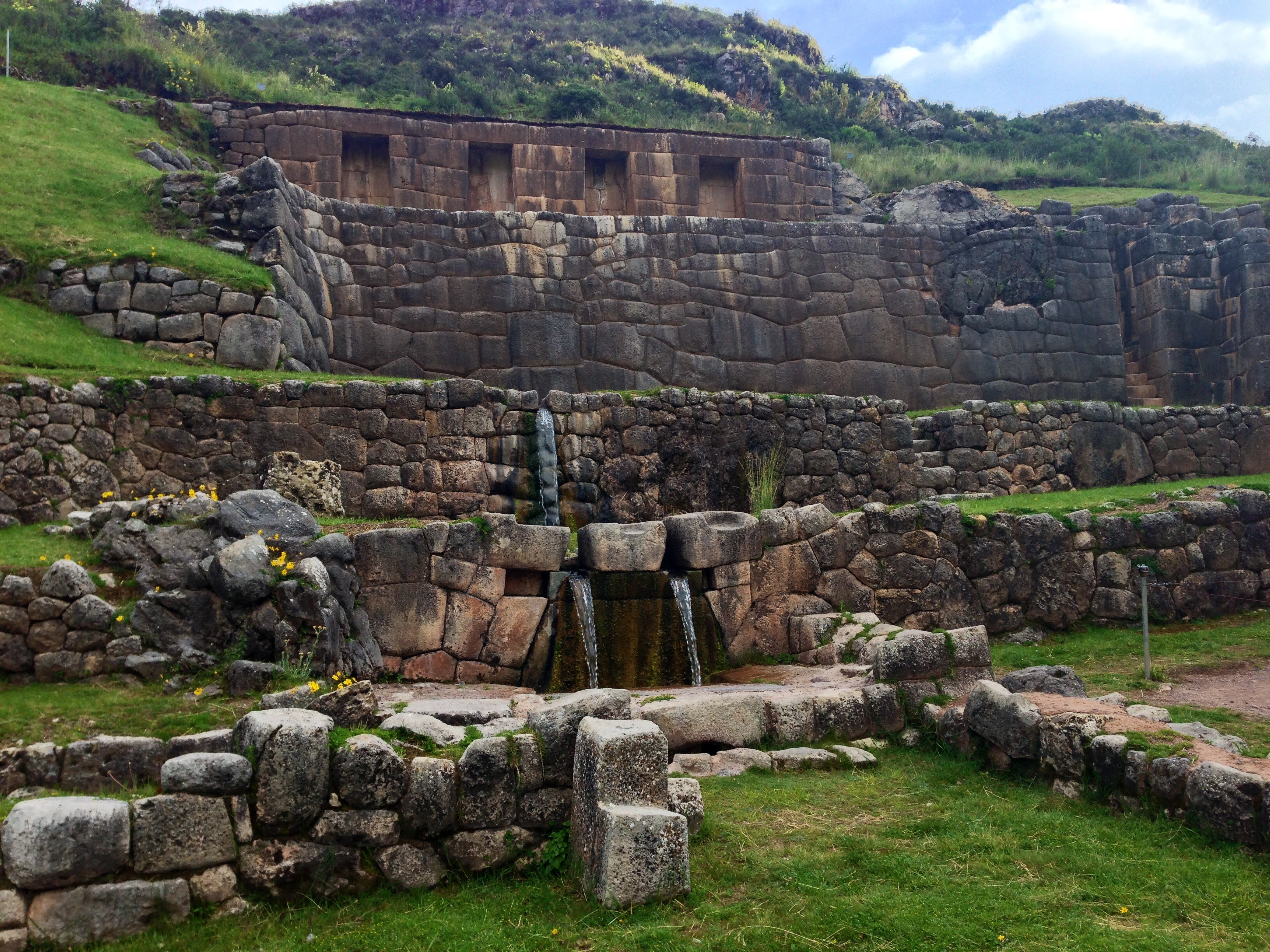
Site is supposed to be dedicated to the cult of water. They say water has never stopped flowing since it was built by the inca. The water flows into a system that provides water for crops and people of the city.
The site consisted of a group of walls united by stairs, there are
springs that cascade to a pool through several channels cut
out in the stones used to build this site. The waterfalls in
these ruins form part of a terrace to the second wall where
the drainage cascades on the first and forms a small pool.
The window sills, holes or niches are 7.5 feet high, and are where, according to historians, the Inca and the most important people of his court offered water rites to the god Inti (sun).
Q’enqo. The main part of this site is a
huge boulder that is surrounded by a type of natural
amphitheatre. The main boulder is worked with different
sculptures of different animals that have a special significance
to the Inca. The site is also considered to be used for
astronomical observations, including, for calendar making.
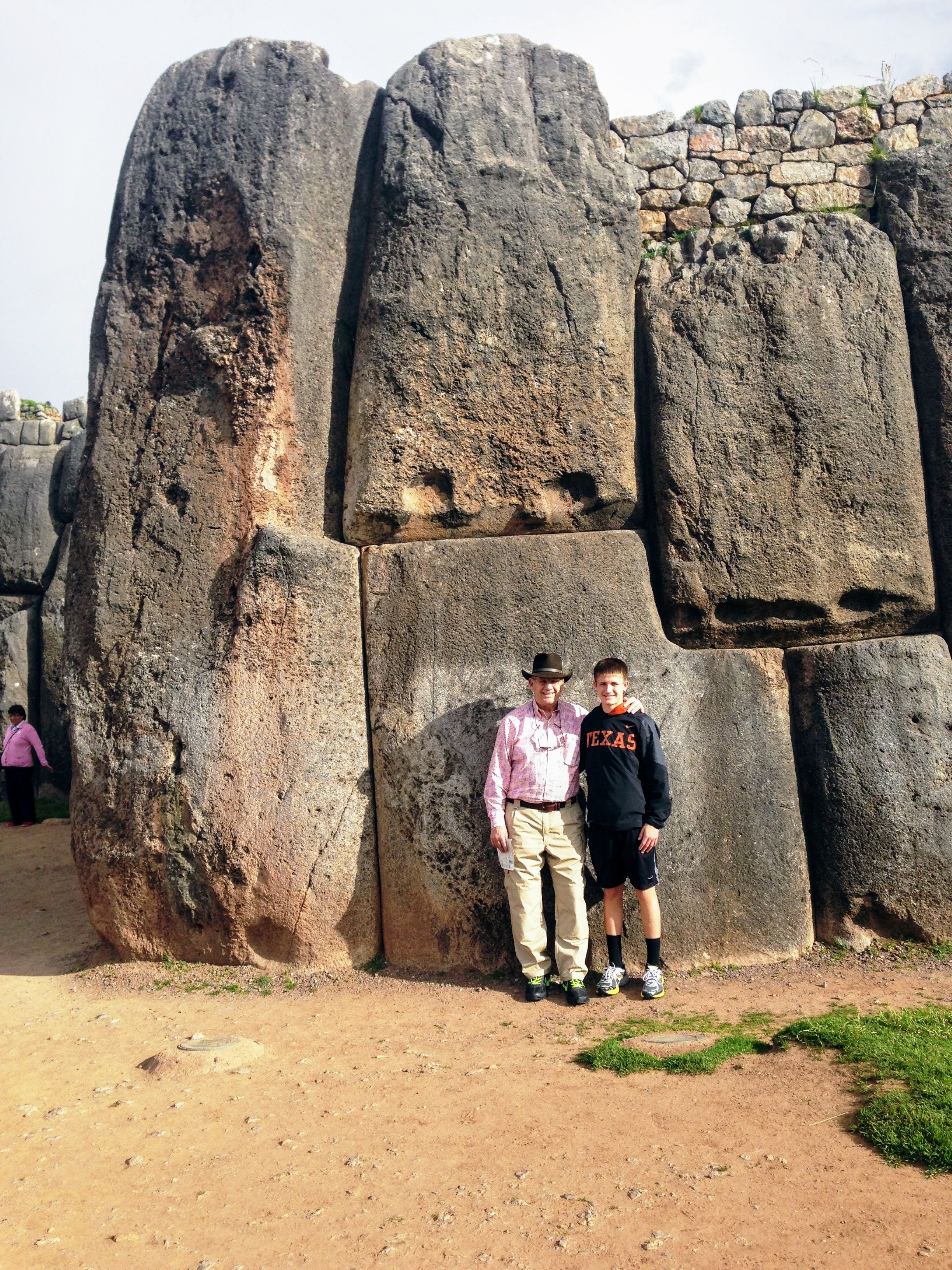
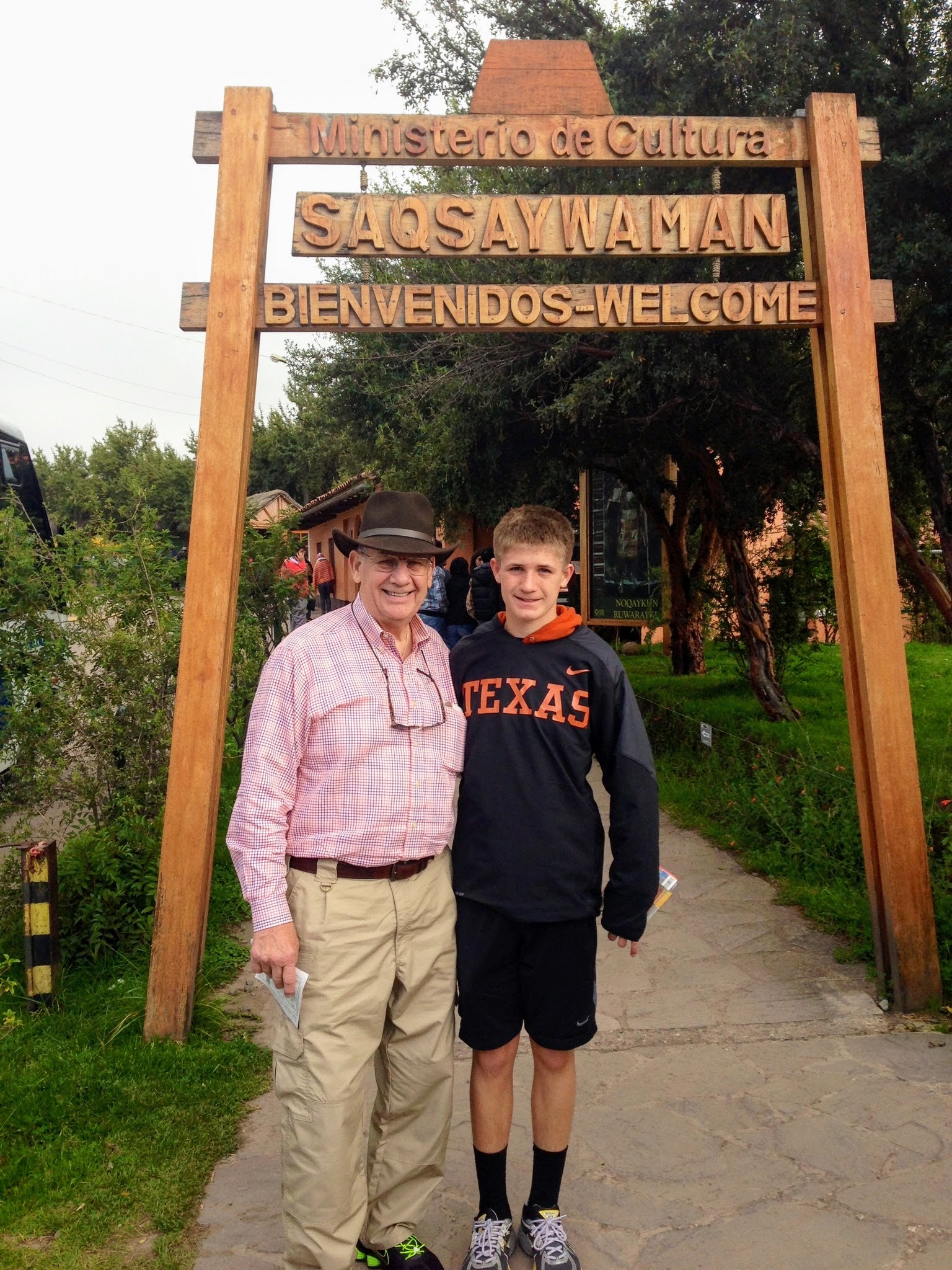
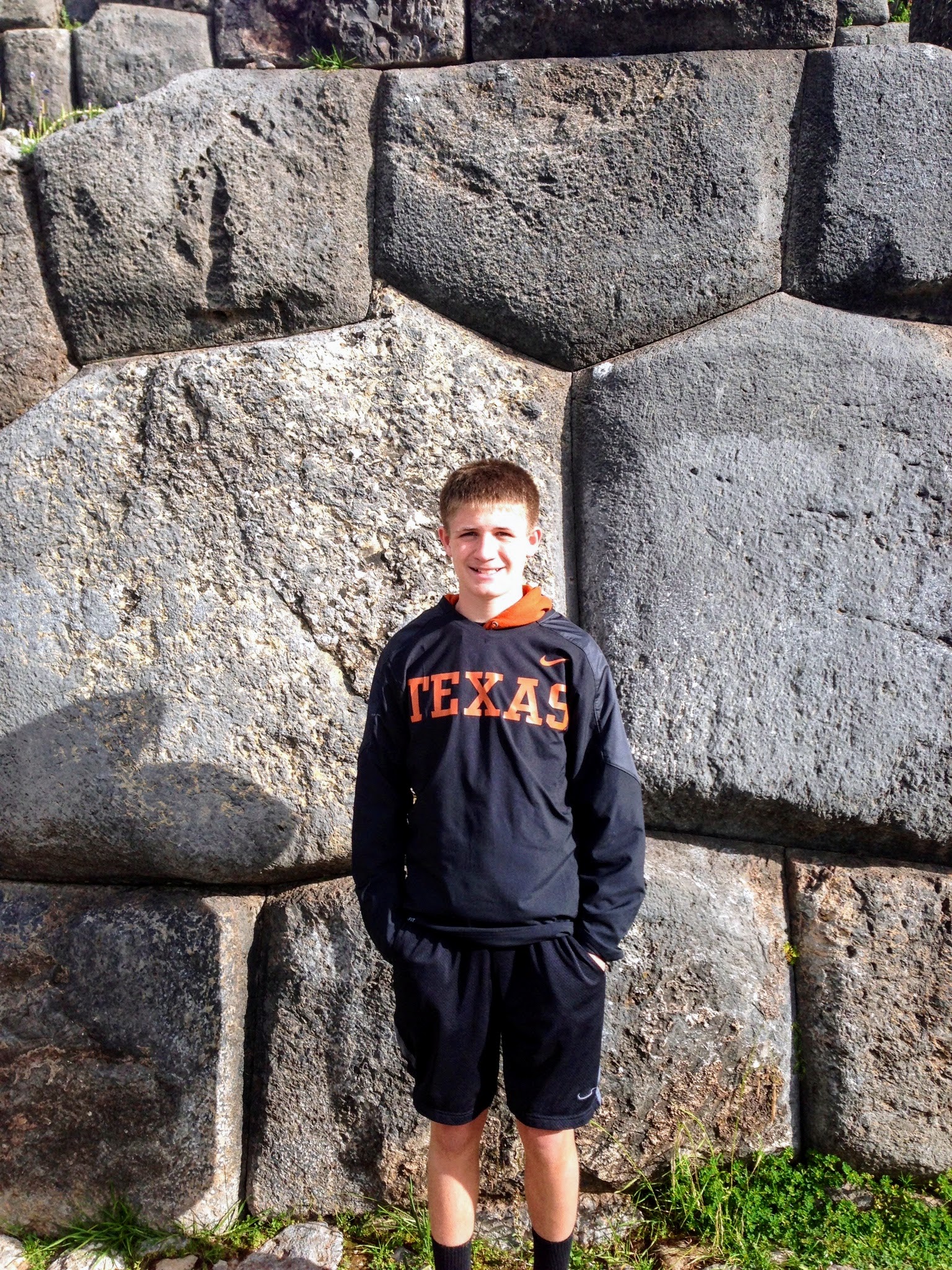
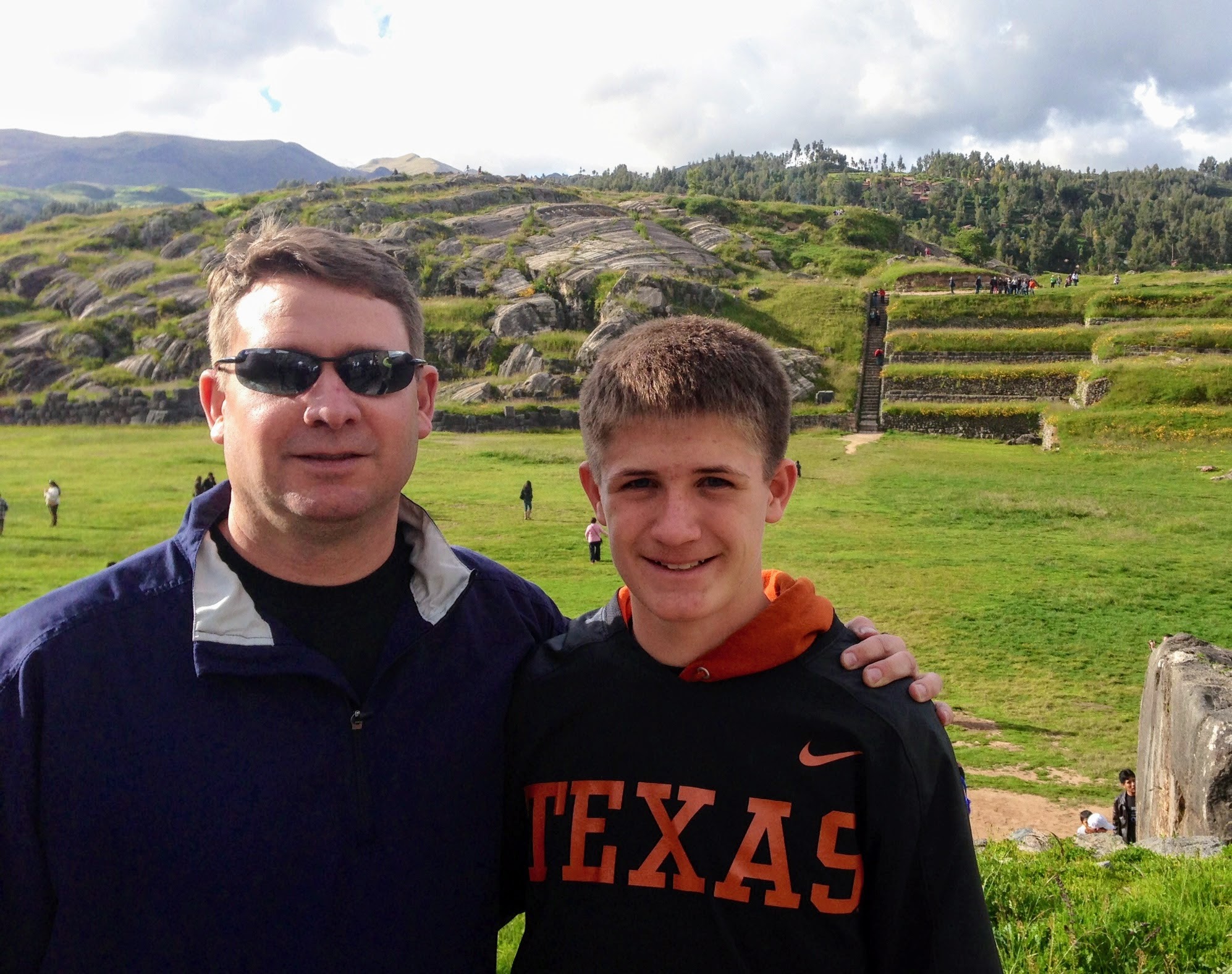
Sacsayhuamán. Its Quechua name means “satisfied falcon”, as it was the falcon that
guarded the capital of the empire.
Cuzco was designed in the shape of a lying puma with Sacsayhuamán
as its head (the angled walls being the teeth of the puma)
I may have lost my senses with all this thin air and drinking this special tea. All I know for sure is a bought a new hat.

 Russellstout.org